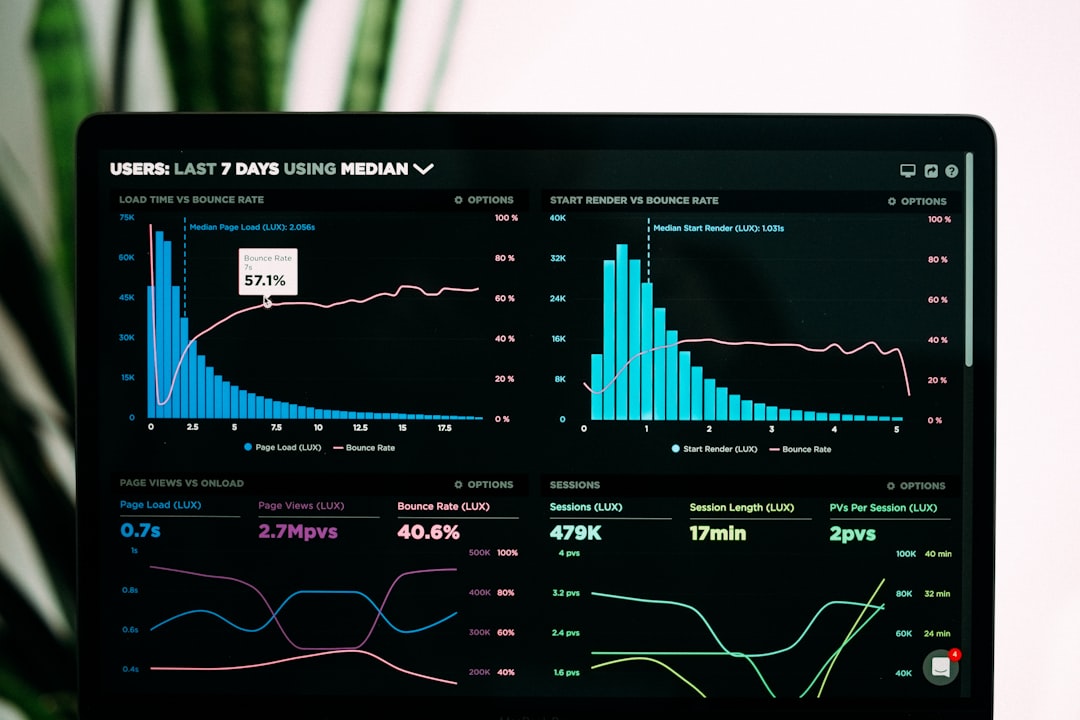
You opened Google Analytics — or maybe someone mentioned it — and the number staring back at you was somewhere between 75% and 95%. Your bounce rate. The percentage of people who land on your website and leave without clicking anything, reading anything, or doing anything.
Here's the hard truth: a high bounce rate is not a cosmetic problem. It is a business problem. Every visitor who leaves without engaging is a potential client, customer, or revenue that walked out of your digital door.
But here's what makes this conversation different from every generic "fix your bounce rate" article you've seen: the reasons Nigerian websites have high bounce rates are not the same as the reasons websites in the UK or US do. Our market, our infrastructure, our buyers — they are unique. And so are the solutions.
At Etest Tech Hub, we have audited hundreds of Nigerian business websites. These seven problems come up again and again. Let's fix them.
Reason 1: Your Website is Hosted on a Server Thousands of Kilometres Away
The Problem
Most Nigerian businesses buy cheap hosting from US or European providers. Every time a visitor in Lagos loads your site, the data travels from Nigeria → Atlantic Ocean → New York → back. That round trip adds 300–600ms of delay before anything even appears.
Why It Hurts You
Google's own data shows 53% of mobile visitors abandon a site if it takes longer than 3 seconds to load. For Nigerian users on 4G — sometimes throttled to 3G — slow hosting is an immediate exit trigger.
The Fix
Use a hosting provider with servers in Africa or at least the Middle East. Afrihost (South Africa) or Contabo (Frankfurt) drastically reduces latency. Even better: deploy with a CDN like Cloudflare (free plan) which caches your site closer to Nigerian visitors.
Cloudflare CDN: Free. African hosting: ₦3,000–₦12,000/year.Reason 2: Your Site Was Designed on a Desktop and Only Tested on Wi-Fi
The Problem
Over 82% of Nigerian internet users access the web primarily on mobile devices — and many are on data plans, not Wi-Fi. A site built on a laptop, tested on fibre broadband, almost always fails the real-world Nigerian user experience.
Why It Hurts You
Huge images, multi-column layouts that collapse poorly, and buttons too small to tap cause immediate frustration. Visitors leave within 5 seconds — and they don't come back.
The Fix
Test your website on your actual phone on mobile data (not Wi-Fi). Use Google's PageSpeed Insights and select 'Mobile' mode. Compress images below 150KB using TinyPNG. Enable lazy loading so images only load when needed.
TinyPNG: Free (up to 20 images/month). PageSpeed Insights: Free.Reason 3: You Have Zero Trust Signals — And Nigerian Visitors Are Sceptical by Default
The Problem
Nigerian consumers are among the most sceptical online buyers in the world — and for good reason. Years of '419' scams, fake online stores, and disappearing vendors have trained them to look for proof before they engage with any business website.
Why It Hurts You
If your website has no phone number, no physical address, no CAC registration number, no client reviews, and no professional photos — visitors assume you're fake and leave immediately.
The Fix
Add your CAC number prominently (e.g., 'RC 1234567'). Show a real phone number (WhatsApp preferred). Display Google Reviews or testimonials with client full names and locations. Add a real team photo or founder photo — nothing closes a trust gap faster than a real face.
All free — just requires adding the content.Reason 4: Your Content Doesn't Match What Nigerians Are Actually Searching For
The Problem
You wrote your website content about your company: 'We are a dynamic, forward-thinking firm committed to excellence...' But your visitor from Google searched for 'how much does a website cost in Nigeria.' There's a mismatch — they landed on the wrong page.
Why It Hurts You
When content doesn't match search intent, visitors bounce instantly because they feel they've clicked the wrong link. This is called 'pogo-sticking' — and Google penalises pages where it happens consistently.
The Fix
Use Google Search Console to see what search terms bring people to each page. Then make sure the page's first paragraph directly addresses that term. If people search 'web design price Nigeria', your page should open with pricing, not company history.
Google Search Console: Free.Reason 5: Too Many Ads, Popups, and Distractions
The Problem
If your site has a cookie popup, a newsletter popup, a WhatsApp bubble, a live chat widget, and three AdSense banners all appearing within the first 4 seconds — your visitor's phone is fighting to load all of that before they see your actual content.
Why It Hurts You
Google's Core Web Vitals penalises sites with aggressive popups on mobile. But beyond rankings, users simply close the tab out of frustration when they're bombarded before they've even read a sentence.
The Fix
Delay popups by at least 30 seconds or trigger them on exit-intent only. Limit AdSense to 2–3 ad units maximum per page. Keep one communication widget visible (WhatsApp is best for Nigerian audiences) and hide the rest.
Configuration only — no cost.Reason 6: There's No Clear Next Step After Landing on Your Site
The Problem
A visitor lands on your homepage, reads a bit, and then... looks around confused. What are they supposed to do? Call? Fill a form? WhatsApp? Buy something? If it's not immediately obvious, they leave.
Why It Hurts You
High bounce rates on service pages are almost always a CTA problem. Visitors aren't confused about your services — they just don't know what action to take next.
The Fix
Every page should have one primary call to action visible without scrolling. For Nigerian businesses, 'Chat on WhatsApp' outperforms contact forms by 3:1 — Nigerians prefer human, real-time conversations before committing. Make your WhatsApp number large, green, and impossible to miss.
Zero — just a layout and copy change.Reason 7: Your Page Speed Score is Below 50
The Problem
Many Nigerian business websites score between 20–45 on Google's PageSpeed Insights mobile test. Every point below 90 costs you real visitors. A score of 30 means your site is so slow it's actively driving people away before they see what you offer.
Why It Hurts You
Google has confirmed that page speed is a ranking factor. A slow site ranks lower and bounces visitors faster — a double punishment that compounds over time.
The Fix
Start with the free wins: compress images, enable browser caching, remove unused plugins (if on WordPress), and switch to a faster theme. If your score is below 40, consider a full website rebuild on a modern stack — the ROI is almost always worth it within 6 months.
Free tools: PageSpeed Insights, GTmetrix. Professional rebuild: ₦80,000–₦350,000.How to Actually Check Your Bounce Rate (Step by Step)
If your site has Google Analytics 4 (GA4) installed, follow these steps:
- Open Google Analytics 4 at analytics.google.com
- Go to Reports → Engagement → Pages and Screens
- Look at the Bounce rate column — note which pages are highest
- Click any page to see its individual metrics
- Also check Average engagement time — if it's under 10 seconds, visitors aren't reading anything
Don't have GA4 installed yet? Your website is operating blind. You have no idea what's working and what isn't. Contact us and we'll set it up for you — it's one of the first things we do for every client.
The One Thing That Matters More Than Bounce Rate
Before you obsess over the number, understand this: not every bounce is bad. If someone finds your phone number on your Contact page and calls you immediately, GA4 might record that as a bounce — even though it was a perfect interaction.
What matters more is whether your website is generating enquiries, calls, WhatsApp messages, or sales. A website with a 65% bounce rate but 50 WhatsApp messages a week is outperforming a site with a 30% bounce rate and zero enquiries.
Track both. Fix the bounce rate. But never lose sight of the goal: turning visitors into customers.
Quick Win Checklist
Frequently Asked Questions
What is a good bounce rate for a Nigerian business website?
It depends on your industry. For service-based businesses (web design, consulting, legal), 40–60% is acceptable. For e-commerce or product pages, aim for 20–40%. Blog pages naturally have higher bounce rates (60–80%) because readers finish the article and leave — and that's fine. Use Google Analytics 4 to track 'engaged sessions' rather than just bounce rate, as GA4 measures engagement more accurately.
My bounce rate is 90%. Is my website broken?
Not necessarily broken, but definitely losing you business. A 90% bounce rate on a homepage or service page means 9 out of 10 visitors leave without doing anything. The most common culprits in Nigeria are slow loading time, lack of trust signals, and a mismatch between what Google says your page is about and what visitors actually find. Start with a PageSpeed Insights test and a content audit.
Does bounce rate affect my Google ranking?
Google has confirmed that 'page experience signals' — which include how long visitors stay and whether they return to search results (pogo-sticking) — influence rankings. While bounce rate alone isn't a direct ranking factor, a high bounce rate usually indicates poor content relevance or poor user experience, both of which Google measures and factors into rankings.
Can a website redesign fix my bounce rate?
Often yes — especially if the current site is on a slow platform, has no mobile optimisation, or was built without a clear conversion goal. However, a redesign without fixing the root cause (hosting speed, content relevance, trust signals) will just give you a pretty site with the same problems. Fix the issues first; redesign second.
Get a Free Website Speed & Bounce Rate Audit
Our team will audit your website, run a full PageSpeed Insights report, and identify the exact reasons your visitors are leaving — with specific fixes for your site. No generic advice. No obligation.