
Pets and consumer apps
Puppy feeding schedule: how often and how much to feed, by age
A puppy feeding schedule by age: four meals until about 3 months, then three, then two from 6 months. How much to feed, and when to switch to adult food.
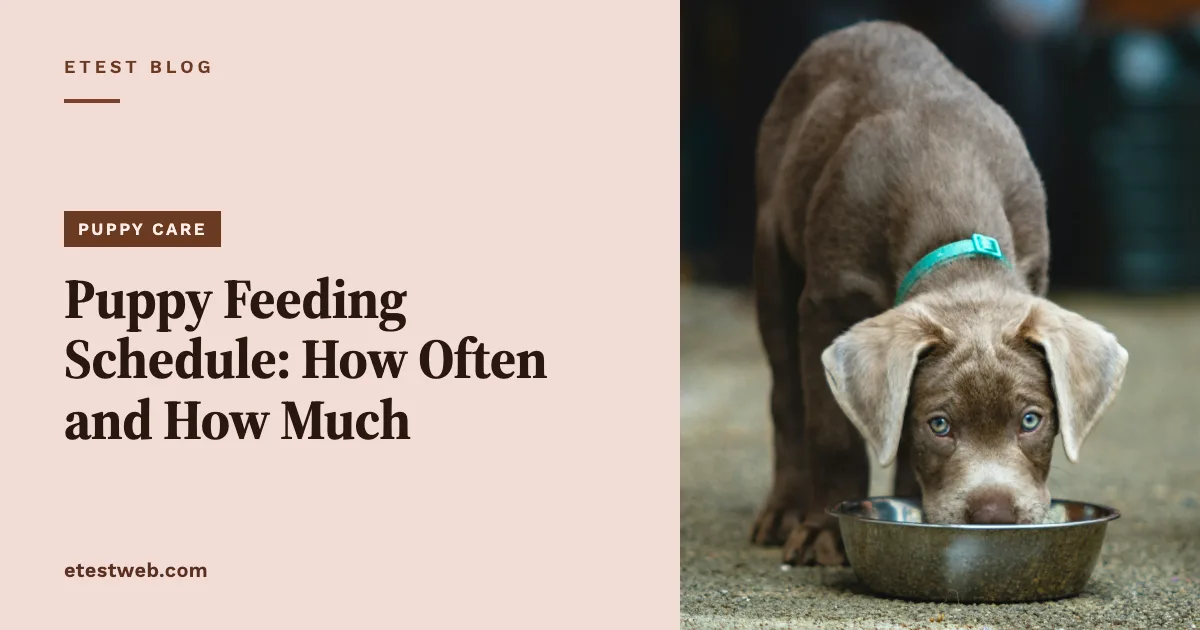
A puppy feeding schedule changes with age: four meals a day until about 3 months, three meals from 3 to 6 months, then two meals a day from about 6 months. Portion size comes from your puppy's body shape and the food label, not from what's left in the bowl. Large breeds stay on puppy food longer.
This is general information, not medical or veterinary advice. Ask your vet.
Key points
- 8 to 12 weeks: four meals a day.
- 3 to 6 months: drop to three meals somewhere in this stretch.
- 6 to 12 months: two meals a day for most puppies.
- How much: start with the label for your food, then adjust by body condition. Weigh your puppy weekly.
- Adult food: around 7 to 9 months for small breeds, 12 to 14 months or later for large breeds, according to the AKC.
How often should I feed my puppy at each age?
Feed young puppies little and often, then space meals out as they grow. The AKC says four feedings a day suit puppies from 6 to 12 weeks, dropping to three somewhere between 3 and 6 months, and to twice daily from 6 to 12 months. The ASPCA gives the same pattern.
| Age | Meals a day | Sample times |
|---|---|---|
| 8 to 12 weeks | 4 | 7:00, 11:00, 15:00, 19:00 |
| 3 to 6 months | 3 | 7:30, 12:30, 18:30 |
| 6 to 12 months | 2 | 7:30, 18:00 |
| Adult | 1 or 2 | Morning and evening suit most dogs |
The times are only an example. What matters is that they're the same every day and spread across the waking hours. A puppy's last meal a couple of hours before bed tends to make the night's toilet trip more predictable, which you'll appreciate around 3am.
On the newborn searches I saw climbing in Google Trends: puppies under about 4 weeks feed from their mother or by bottle on a much tighter schedule. If you're raising a litter without the mother, that's a job for your vet's guidance, not a chart.
How much should I feed my puppy?
Start with the feeding guide on your puppy food's bag, which is set by age and expected adult weight, and split that daily amount across the meals. Then watch the puppy, not the bowl. The AKC says body condition, not what is eaten or left over, should set portion size.
What to look for, in plain terms:
- About right: you can feel the ribs under a thin layer of fat without pressing, and there's a visible waist from above.
- Too much: no waist, ribs hard to feel, loose stools after meals.
- Too little: ribs, spine or hip bones easy to see, or a puppy that seems hungry and flat between meals.
Weigh the puppy once a week, the AKC suggests, and keep a note. A steady upward line is what you want. A sudden jump or a stall is worth a call to the vet.
Treats count too. Veterinary nutritionists writing for VCA Animal Hospitals say no more than 10% of daily calories should come from treats or snacks. During training weeks that adds up fast, so take a few pieces of the day's kibble out of the meal and use them as rewards.
Should I leave food out for my puppy all day?
Most guidance says no. The AKC recommends feeding at regular times in regular amounts and picking the bowl up after about 15 minutes. Set meals let you see how much the puppy actually eats, make toilet training easier to predict, and stop a picky habit before it starts.
If your puppy walks away from food it ate happily yesterday, try the next meal at the normal time instead of adding toppings. One skipped meal in a healthy, lively puppy is common. Repeated refusal, vomiting or diarrhea is a vet visit.
Water is different. Keep fresh water available all day.
When should a puppy switch to adult food?
When growth slows, which depends on size. The AKC says small breeds can move to adult food at about 7 to 9 months, and larger breeds at 12, 13 or even 14 months. It suggests staying on puppy food a little too long rather than switching too early.
Large and giant breeds need extra care. Veterinary nutritionists at VCA say excess calories in these puppies can lead to abnormal skeletal development, and that too much calcium can contribute to growth problems. So feed a food made for large breed puppies, keep them lean, and don't add calcium supplements unless your vet asks you to.
When you do switch, mix the new food into the old over about a week. A sudden change is the usual cause of an upset stomach.
My view: a lot of puppy tummy trouble comes from changing too many things at once. New home, new food, new times and a pile of treats in the same week. Change one thing at a time.
What about the clocks changing?
US clocks went back an hour on 1 November 2026, and puppies don't read clocks. If your puppy is suddenly up and hungry an hour early, shift meal times by 10 to 15 minutes a day until you're back on schedule. A few days of gradual change is easier on both of you than a sudden hour.
How can Pawlarm keep a puppy's meals on time?
I built Pawlarm so a puppy's routine doesn't depend on memory. You enter your dog's name, breed and age, and it builds a starter care plan you can edit. For a puppy under 4 months it sets four meal reminders at 7:00, 11:00, 15:00 and 19:00, then three meals at 7:30, 12:30 and 18:30 until the puppy reaches its adult stage.
The adult stage comes later for bigger dogs: 12 months for toy, small and medium breeds, 15 months for large breeds and 18 months for giant breeds. After that the plan moves to two meals, at 7:30 and 18:00.
One honest difference: Pawlarm keeps three meals until the adult stage, while the AKC moves most puppies to two meals from about 6 months. If your vet agrees with two meals at 6 months, change the reminder in the app. Every reminder can be edited or switched off, you can add more than one pet, and there's no account, so your pet's details stay on your phone.
The same plan covers walks, training, grooming and monthly flea and heartworm reminders. Find it on the Pawlarm page, or read my new puppy checklist for the first 30 days and the puppy vaccine schedule for what else the first months bring.
Frequently asked questions
How many times a day should a puppy eat?
Four times a day from about 8 to 12 weeks, three times a day from around 3 to 6 months, and twice a day from about 6 months, according to the AKC and the ASPCA. Large breeds may keep three meals a little longer. Ask your vet if your puppy's size or health needs a different plan.
How much should I feed my puppy?
Start with the feeding guide on your puppy food, based on age and expected adult weight, and split it across the day's meals. Then adjust by body condition: you should feel the ribs easily without seeing them. Weigh your puppy weekly and ask your vet if growth stalls or jumps.
What is a good feeding schedule for an 8 week old puppy?
Four small meals spread through the day, such as 7:00, 11:00, 15:00 and 19:00, at the same times every day. Pick the bowl up after about 15 minutes and keep fresh water available. An 8 week old puppy should usually still be on a puppy food recommended by your vet or breeder.
When should I switch my puppy to adult food?
Small breeds often switch at about 7 to 9 months, and larger breeds at 12 to 14 months or later, according to the AKC. Large and giant breed puppies should stay on a large breed puppy food until growth slows. Mix the new food in gradually over about a week.
Can I free feed my puppy?
Most guidance advises against it. The AKC recommends set meal times and picking the bowl up after about 15 minutes. Set meals show you how much your puppy really eats, help with toilet training, and make it easier to spot a change in appetite early.
How I wrote this
On 5 November 2026 I read the AKC's puppy feeding guide, updated in October 2026, and the VCA Animal Hospitals article on feeding growing puppies by the Canadian Academy of Veterinary Nutrition, and rechecked the ASPCA meal ages I used in my new puppy checklist. I checked Google Keyword Planner and Google Trends for the United States and read recent posts on X from owners. The Pawlarm details come from the app's own source code. Sample times and the clock change tip are my own suggestions.
This is general information, not medical or veterinary advice. Ask your doctor or vet.
See the apps I published
Etest CBT, FizzFree and Pawlarm are my own apps. Each has a page with what I built and how.

John Osakwe
John Osakwe has built 100+ apps and websites since 2015, including Etest CBT, FizzFree and Pawlarm. More about John.